


Industrial Solar Panel Cleaning: Is It Worth the Investment?
Why Professional Solar Panel Cleaning Matters for Large-Scale PV Systems
For utility-scale and commercial solar installations, maintaining stable energy production is essential for maximizing the return on investment (ROI). Although photovoltaic (PV) modules are designed to operate with minimal maintenance, environmental factors such as dust, pollen, pollution, and agricultural particles can gradually reduce solar panel performance.
This accumulation of dirt and contaminants on the surface of solar modules is commonly known as PV soiling. When sunlight is blocked from reaching the photovoltaic cells, the system may experience reduced energy generation and lower overall efficiency.
For small residential systems, occasional cleaning may have a limited impact. However, for industrial-scale solar farms containing thousands of modules, even a small percentage of performance loss can translate into significant energy and revenue reductions.
Therefore, professional solar panel cleaning should not simply be viewed as an additional operating cost. In areas with high soiling rates, it can become an important part of a comprehensive solar operations and maintenance (O&M) strategy.
How Dust and Pollen Affect Solar Panel Performance
Solar panels are exposed to various environmental conditions throughout their operating life. Common sources of contamination include:
- Desert dust and airborne particles
- Agricultural dust from farming activities
- Pollen and biological residues
- Industrial pollution and emissions
- Bird droppings and organic debris
While rainfall can naturally remove some surface dirt, it does not always provide sufficient cleaning for solar modules.
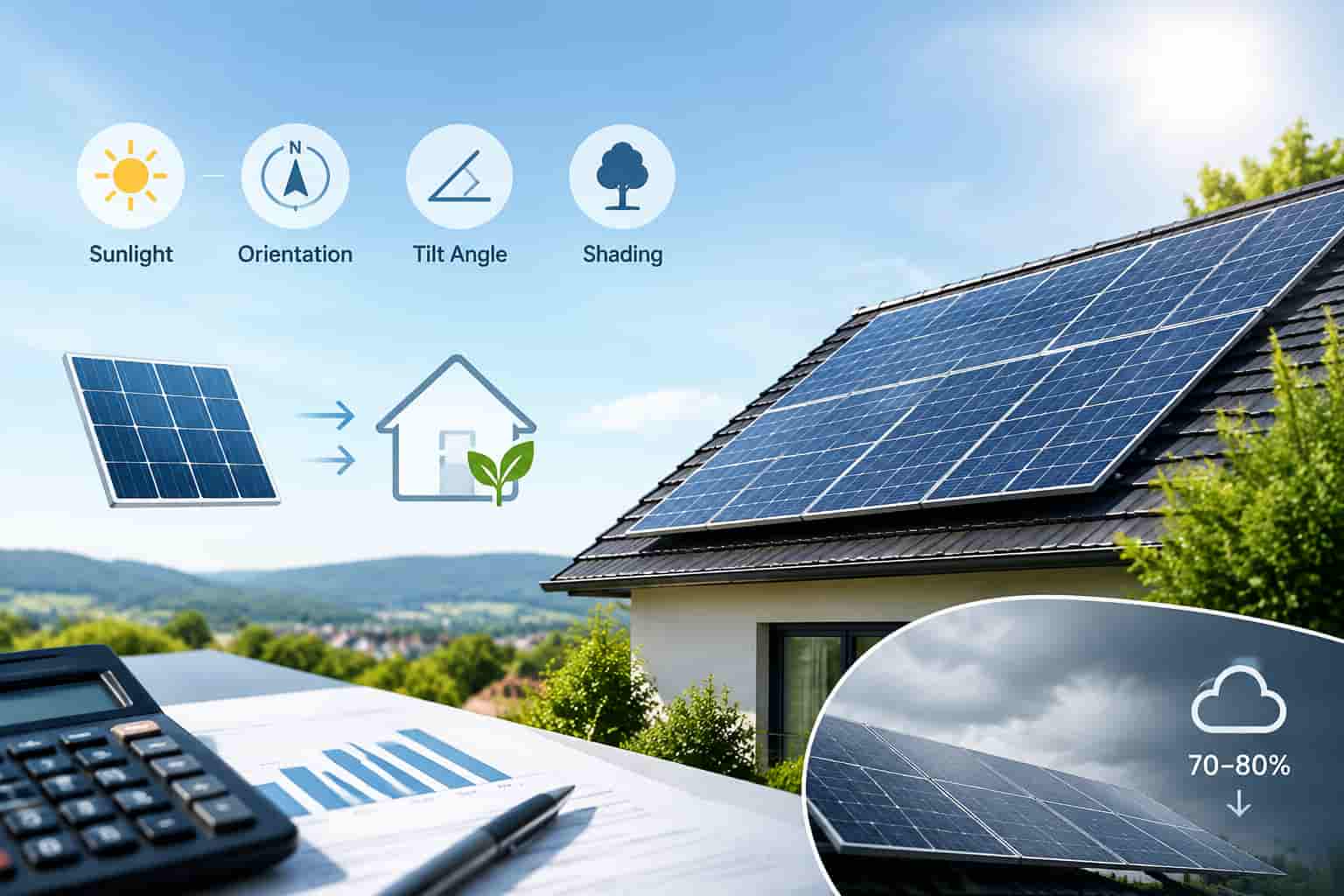
Research from the National Renewable Energy Laboratory (NREL) found that rainfall alone may not effectively remove pollen from solar panels. Studies conducted on utility-scale PV plants showed that pollen accumulation could significantly reduce system performance, and natural rainfall was not always enough to restore original output levels.
NREL research on photovoltaic soiling also highlights that dust and other contaminants can decrease PV efficiency and affect the financial performance of solar assets.
When Is Industrial Solar Panel Cleaning Necessary?
Not every solar installation requires frequent cleaning. The optimal cleaning schedule depends on site conditions, climate, and the economic impact of energy losses.
Professional solar panel cleaning is generally recommended when:
1. The Installation Is Located in a Dry or Dusty Environment
Solar farms in deserts, semi-arid regions, or areas with frequent dust storms often experience higher levels of surface contamination.
2. The Solar Farm Is Near Agricultural Areas
Farms and rural locations may experience increased dust, soil particles, and seasonal pollen accumulation, which can reduce solar output.
3. The System Is Installed Near Industrial Zones
Factories, construction sites, and transportation areas can release airborne particles that accumulate on solar modules.
4. Monitoring Data Shows Production Losses
Modern PV monitoring systems can help operators identify abnormal performance reductions caused by soiling. Cleaning decisions should ideally be based on measured energy losses rather than fixed schedules.
According to NREL guidelines, cleaning strategies should consider local contamination sources, including dust, pollen, agricultural activities, and industrial emissions.
Professional Equipment for Large-Scale Solar Panel Cleaning
As solar farms continue to grow in size, traditional manual cleaning methods are becoming less practical. Industrial solar panel cleaning requires equipment that can improve efficiency while protecting module surfaces.
Common professional cleaning solutions include:
Automated Solar Cleaning Robots
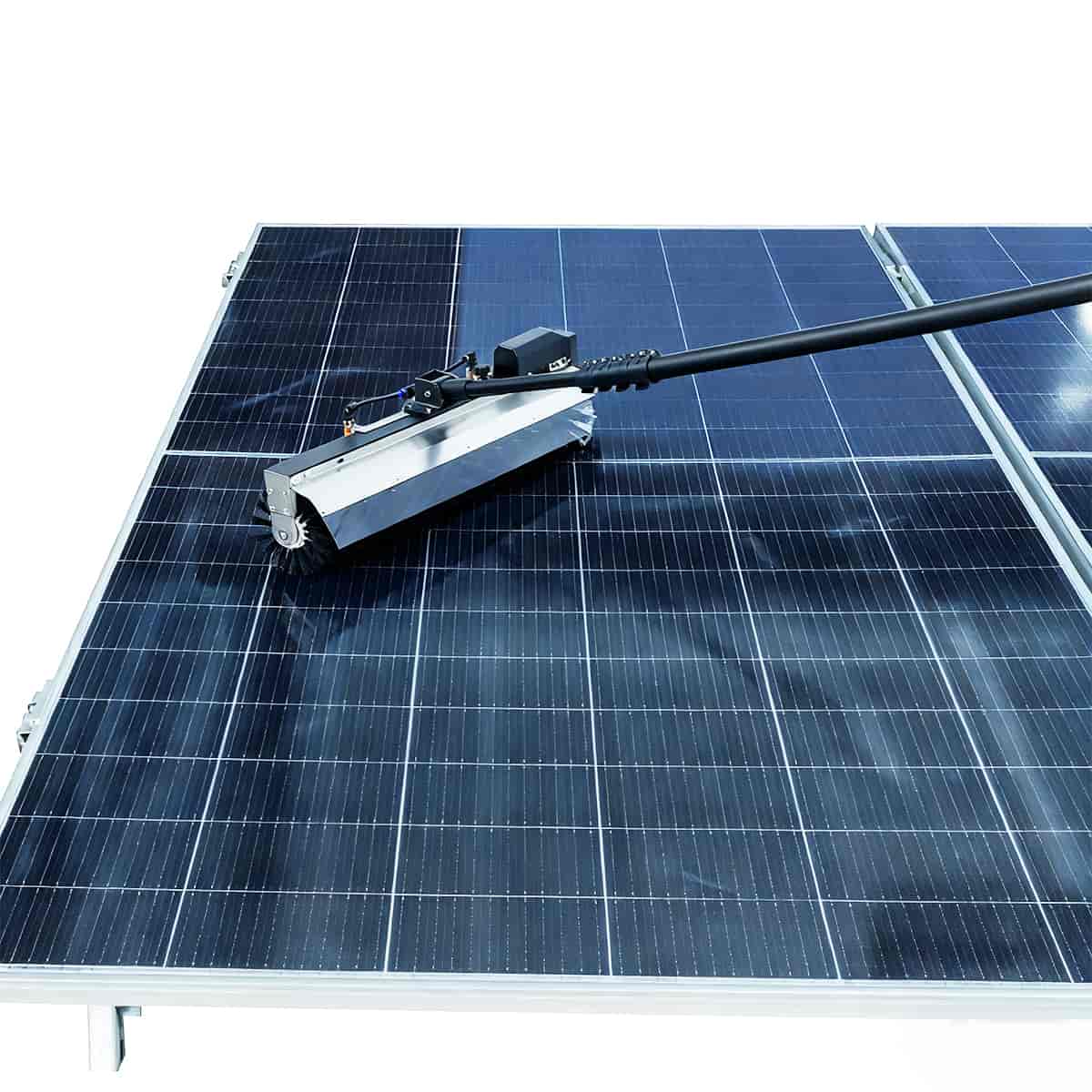
Cleaning robots are increasingly used in utility-scale PV projects. These systems can travel across solar arrays and remove dust using brushes or dry-cleaning technologies.
Advantages include:
- Reduced labor costs
- Improved cleaning consistency
- Lower safety risks for workers
- Suitable for large solar farms
Water-Based Cleaning Systems
Professional water cleaning equipment uses controlled water flow and specialized brushes to remove stubborn dirt without damaging module glass.
Proper cleaning systems should avoid:
- Abrasive materials
- Excessive pressure
- Harsh chemical detergents
NREL recommends using appropriate cleaning methods to avoid damage to PV module surfaces during maintenance activities.
Drone-Based Inspection and Cleaning Solutions
Drone technology is becoming increasingly valuable for solar farm management. Although most drone applications currently focus on inspection and thermal monitoring, future solutions may combine automated inspection with cleaning functions.
Benefits include:
- Faster site assessment
- Identification of contaminated areas
- Reduced manual inspection requirements
Is Solar Panel Cleaning a Cost or an Investment?
The economic value of cleaning depends on the relationship between cleaning costs and recovered energy production.
For industrial-scale solar projects, operators should evaluate:
- Current energy losses caused by soiling
- Local cleaning costs
- Electricity prices
- Weather patterns
- Expected production recovery after cleaning
In regions with heavy dust or pollen exposure, cleaning can recover lost generation and improve long-term system performance.
However, unnecessary cleaning can increase operational expenses without providing meaningful benefits. A data-based maintenance approach helps determine the right cleaning frequency and ensures better cost efficiency.
The Role of Solar Cleaning in Long-Term PV Maintenance
Professional solar panel cleaning is only one component of effective solar asset management. A complete PV maintenance strategy should also include:
- Performance monitoring
- Electrical inspections
- Inverter maintenance
- Thermal imaging inspections
- Preventive component checks
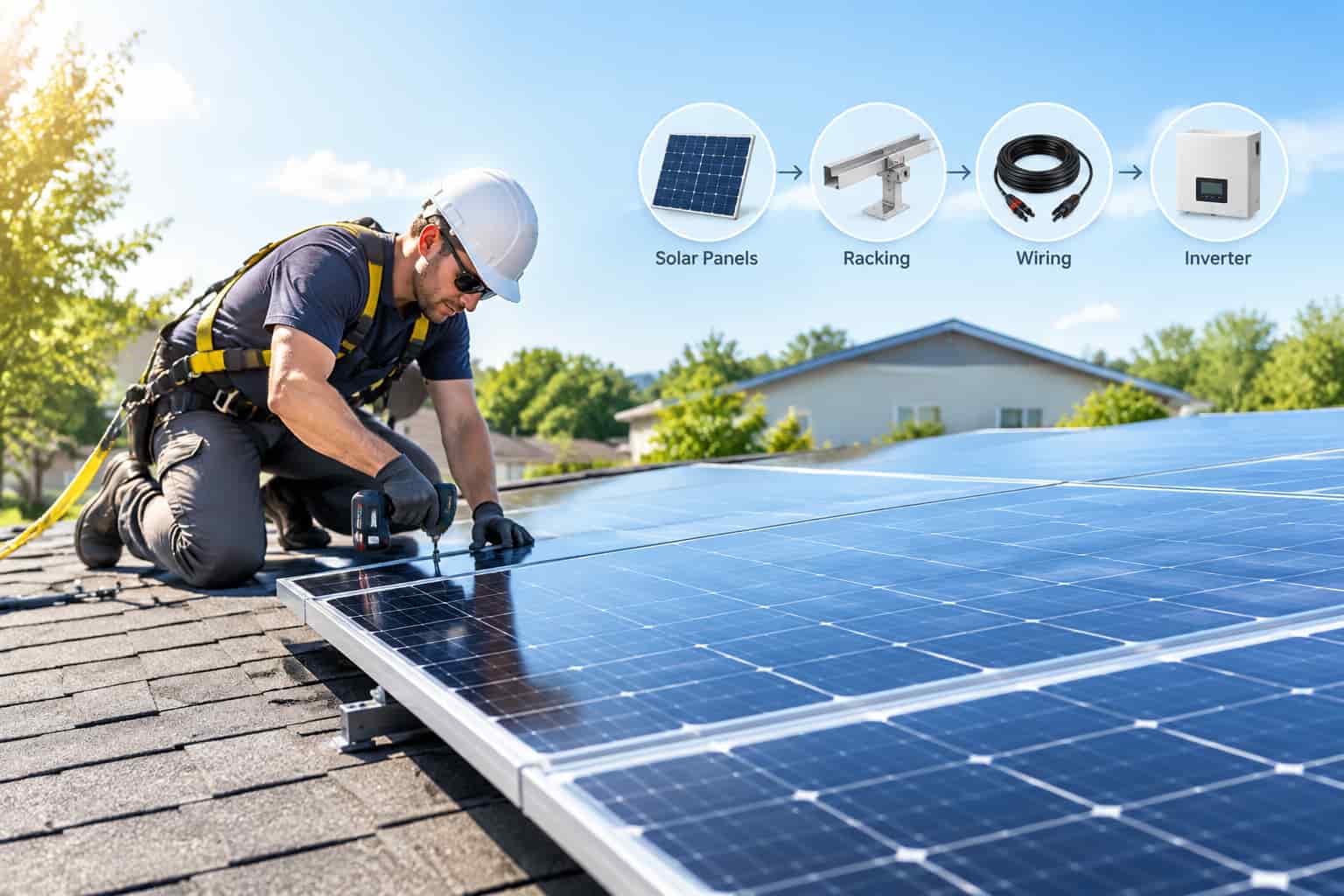
For commercial and utility-scale solar systems, combining regular monitoring with professional cleaning helps maintain energy output, extend system lifespan, and improve overall project profitability.
Conclusion: Choosing the Right Solar Cleaning Strategy
Industrial solar panel cleaning is not always required, but it can provide significant value in environments where dust, pollen, or pollution affects PV performance.
The best approach is not simply cleaning as often as possible, but implementing a maintenance strategy based on actual site conditions and performance data.
With the development of automated cleaning robots, advanced equipment, and intelligent monitoring technologies, professional solar panel cleaning is becoming a more efficient and reliable solution for maintaining large-scale photovoltaic systems.

