









Different Types of Photovoltaic Technology: PERC, TOPCon, HJT and Beyond
The Evolution of Photovoltaic Technology
The photovoltaic industry is experiencing rapid technological development. As global demand for renewable energy continues to grow, solar manufacturers are focusing on improving solar cell efficiency, reliability, and production costs.
For many years, PERC (Passivated Emitter and Rear Cell) technology dominated the solar market. However, as efficiency improvements became more challenging, the industry started shifting toward advanced N-type photovoltaic technologies, including TOPCon, HJT, and BC (Back Contact).
Today, choosing the right photovoltaic technology has become an important decision for solar distributors, installers, and project developers.Different technologies offer different advantages in terms of efficiency, cost, manufacturing scalability, and long-term performance.
Overview of Main Photovoltaic Technologies
| Photovoltaic Technology | Typical Efficiency Range | Main Advantages |
|---|---|---|
| PERC | 21%-23% | Mature technology, cost-effective production |
| TOPCon | 22%-25% | High efficiency, mainstream N-type technology |
| HJT | 23%-26% | Excellent efficiency and temperature performance |
| BC | 24%+ potential | Maximum efficiency potential and premium performance |
Efficiency ranges vary depending on cell design, wafer size, and manufacturer specifications.
PERC Technology: The Foundation of Modern Solar Panels
PERC technology has played an important role in the growth of the solar industry over the past decade.By adding a rear passivation layer, PERC solar cells reduce electron losses and improve energy conversion compared with traditional Al-BSF cells.
Key advantages:
- Optimized and fully mature manufacturing process with stable yield rate and low technical iteration risk
- Sound industrial chain support and mass-production capability to meet global large-scale project deployment demands
- Controllable manufacturing cost and high cost-performance ratio with optimized processing and material consumption
- Proven long-term field reliability and stable power generation performance in diverse climatic environments
However, PERC technology is approaching its theoretical efficiency limits.According to the International Technology Roadmap for Photovoltaics (ITRPV), the photovoltaic industry is gradually transitioning from PERC toward N-type technologies such as TOPCon and HJT.For this reason, many manufacturers are upgrading production capacity fromPERC to higher-efficiency solar technologies.
TOPCon Solar Technology: The Current Mainstream Choice
TOPCon (Tunnel Oxide Passivated Contact) is currently one of the fastest-growing advanced photovoltaic technologies.
TOPCon uses an N-type silicon structure with a thin oxide passivation layer. This design reduces recombination losses and improves electrical performance.
Main benefits of TOPCon solar panels:
- Higher conversion efficiency
- Lower degradation rate
- Better temperature coefficient
- Improved energy yield
- Compatibility with existing production lines
TOPCon has become the preferred upgrade path for many solar manufacturers because it provides a strong balance between efficiency and manufacturing cost.
According to NREL’s analysis based on ITRPV projections, TOPCon is expected to become one of the dominant photovoltaic technologies in the coming years, with strong market growth compared with traditional PERC technology.
Independent solar efficiency research also shows that large-area TOPCon cells have achieved efficiency levels above traditional PERC technology.
BC Technology: The Next Generation of High-Efficiency Photovoltaics
BC (Back Contact) technology represents another direction for future photovoltaic development.
Unlike traditional solar cells, BC technology places electrical contacts on the back side of the cell. This reduces front-side shading and allows more sunlight to reach the active area.
Advantages include:
- Higher efficiency potential
- Improved appearance
- Better power output per installation area
According to TaiyangNews, BC technology currently achieves some of the highest commercial module efficiency levels, although production scale remains smaller compared with TOPCon.BC technology is expected to play an important role in premium solar applications in the future.
TOPCon vs HJT vs BC: Which Photovoltaic Technology Is Better?
There is no single technology that fits every project.
TOPCon Solar Panels
- Utility-scale solar projects
- Commercial rooftop systems
- Cost-sensitive applications
HJT Solar Panels
- Premium residential systems
- Limited rooftop space
- High-temperature regions
BC Solar Technology
- High-end solar applications
- Projects requiring maximum efficiency
The Future of Photovoltaic Technology: Efficiency + Intelligence + Storage
The next generation of photovoltaic systems will combine:
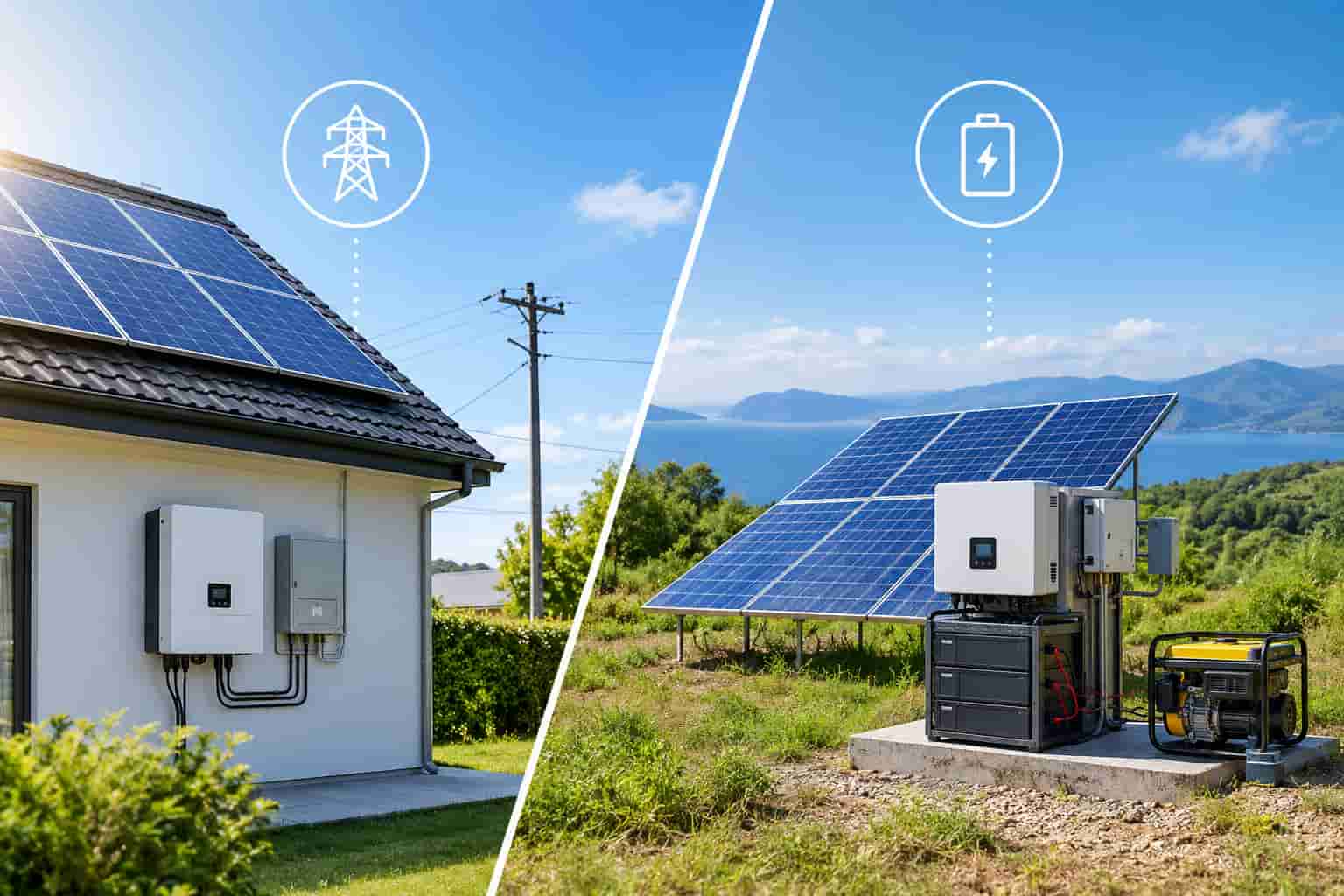
High-efficiency solar modules + smart inverters + energy storage systems
Solar manufacturers are increasingly focusing on integrated energy solutions.
MINVIC provides complete renewable energy solutions, including advanced photovoltaic modules, solar inverters, and lithium battery storage systems. By combining reliable hardware with intelligent energy management, we help customers improve solar energy utilization and achieve higher energy independence.
Conclusion: Choosing the Right Solar Technology for the Future
PERC technology created the foundation of modern solar manufacturing. TOPCon is currently becoming the mainstream choice for high-efficiency photovoltaic modules. HJT and BC technologies continue to push the limits of solar performance.
For most commercial applications, TOPCon solar panels offer the best balance between efficiency, cost, and availability.
For projects requiring maximum performance, HJT and BC technologies provide greater efficiency potential.
As photovoltaic technology continues to evolve, higher efficiency, lower costs, and smarter energy systems will define the future of solar energy.

