

Photovoltaic Technology: A Reliable Backup Power Solution During Grid Failures
Unstable electricity supply has become a major challenge for many households and businesses. Unexpected grid failures can interrupt daily activities, affect communication, and stop essential equipment from operating.
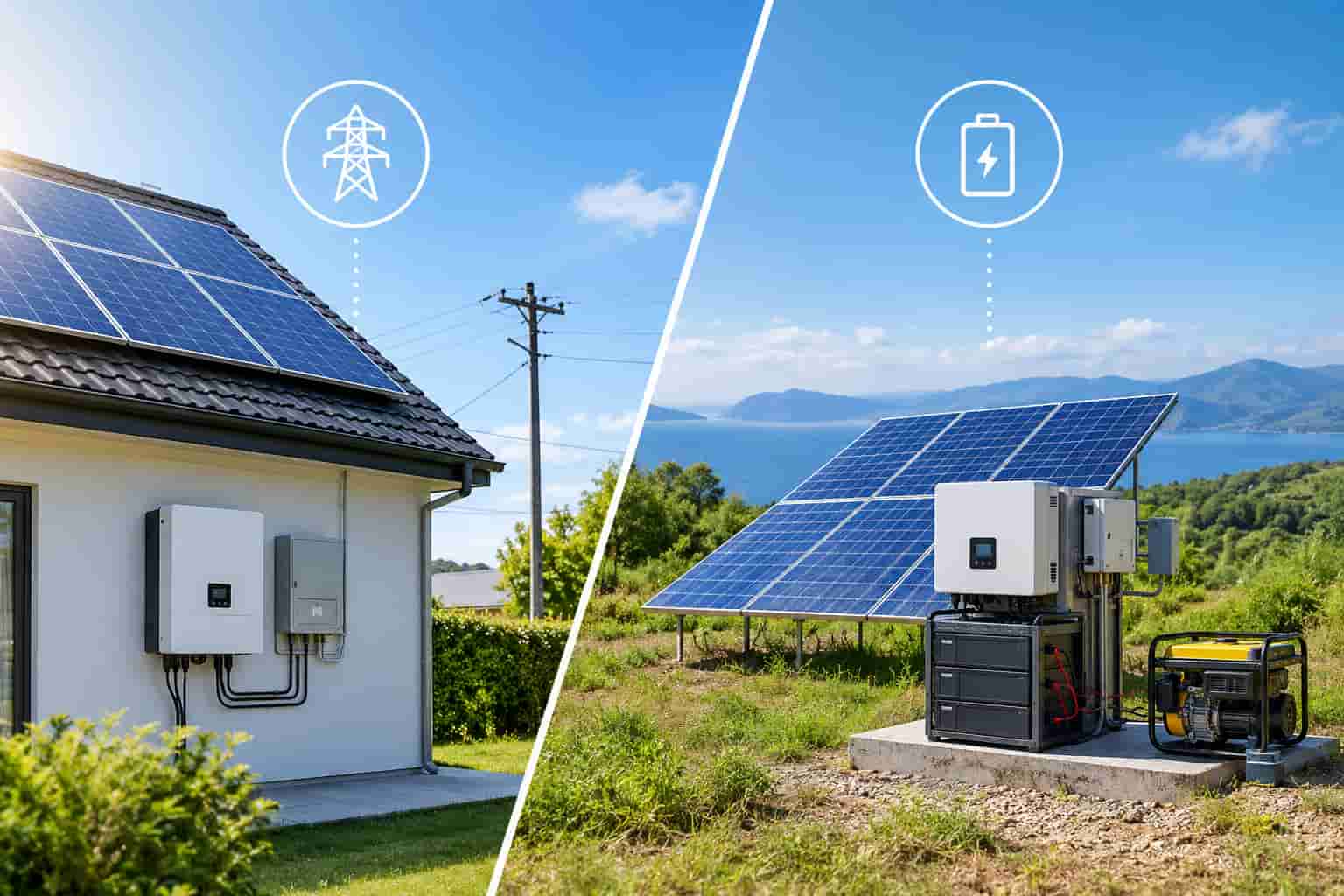
Traditional backup generators can provide emergency electricity, but they require fuel, regular maintenance, and produce additional operating costs.
With the development of photovoltaic technology, a solar energy storage system combining solar panels, hybrid inverter, and battery storage has become a more efficient and economical backup power solution.
According to the International Energy Agency (IEA), distributed energy resources such as photovoltaic systems and battery storage can help consumers reduce dependence on the traditional grid and improve electricity resilience during power interruptions.
Why Grid Failures Require a Smarter Energy Solution
Power outages can create serious problems for residential and commercial users:
- Lighting systems stop working
- Internet routers lose power
- Refrigerators and freezers may stop operating
- Heating systems may be affected during cold seasons
- Communication devices cannot be charged
For regions with unstable grid conditions, the key requirement is not only generating electricity but also storing and managing energy efficiently.
A Modern Photovoltaic System With Battery Storage Provides Three Advantages
1. Reduce Dependence on the Grid
Solar panels generate electricity during the daytime. Excess energy can be stored in batteries instead of being wasted.
When electricity prices increase or the grid fails, stored energy can supply household appliances.
Battery energy storage systems (BESS) can capture excess solar power generated during peak photovoltaic production periods and provide electricity when the grid is unavailable. According to NREL’sresidential PV-plus-storage analysis, a typical 5 kW solar system combined with a 20 kWh battery storage system can provide approximately 35 hours of backup power without solar recharging under a 10 kWh/day emergency load scenario. If the photovoltaic system continues generating electricity and provides 30% of daily PV output for battery charging, the backup duration can extend to approximately 4 days.
For residential applications, a 10 kWh battery storage system can typically provide around 5 hours of backup power when supporting a 2 kW average load, while larger capacity systems can achieve longer autonomy during extended grid failures.
2. Maintain Electricity During Power Outages
The core component that connects solar generation, batteries, and household loads is the hybrid inverter.
Unlike traditional solar inverters, hybrid inverters support multiple operating modes:
- Grid-connected operation
- Solar energy conversion
- Battery charging and discharging
- Backup power output
- Automatic switching during grid failure
According to the National Renewable Energy Laboratory (NREL), hybrid inverter systems can enable PV systems to operate in backup mode when the grid goes down, creating an intentional islanded power supply.This means users can continue powering essential loads even when external electricity is unavailable.
3. Lower Long-Term Energy Costs
A photovoltaic system with battery storage not only provides backup power but also helps users reduce electricity costs over the long term.
During periods of high solar production, excess electricity can be stored in the battery instead of being sent back to the grid or wasted. Users can then use stored energy during peak electricity price periods or during grid interruptions, reducing dependence on expensive grid electricity.
According to the U.S. Department of Energy, combining solar photovoltaic systems with energy storage allows renewable energy to be used even when solar generation is unavailable,improving energy utilization and reducing electricity demand fluctuations.
For residential applications, a photovoltaic system equipped with a hybrid inverter and battery energy storage system can support multiple energy management modes:
- Solar power priority for daily electricity use
- Excess solar energy stored in batteries
- Battery discharge during high-demand periods
- Backup power supply during grid failures
This intelligent energy management helps homeowners maximize the value of every kilowatt-hour generated by their photovoltaic system.
How Photovoltaic Technology Creates a Backup Power System
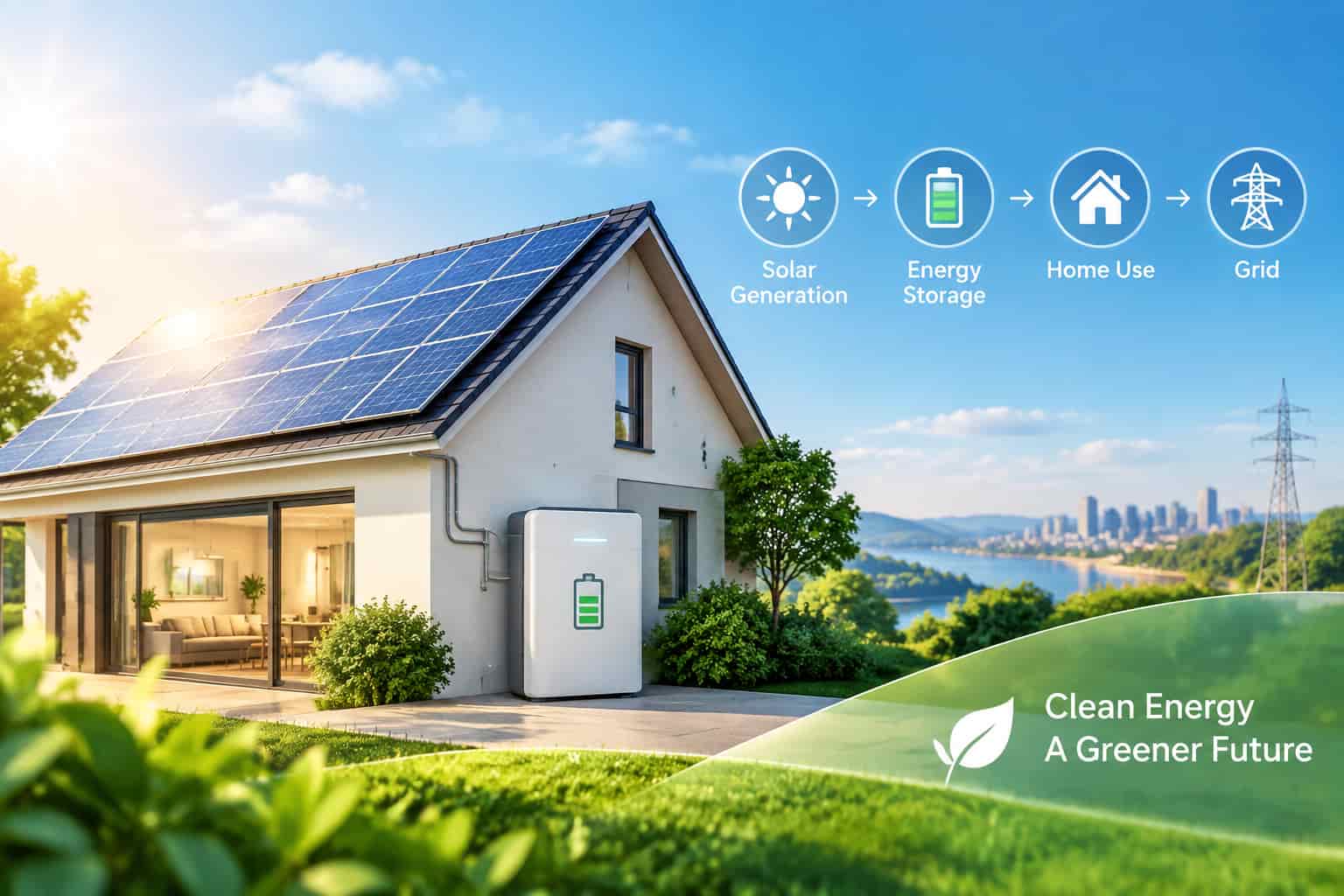
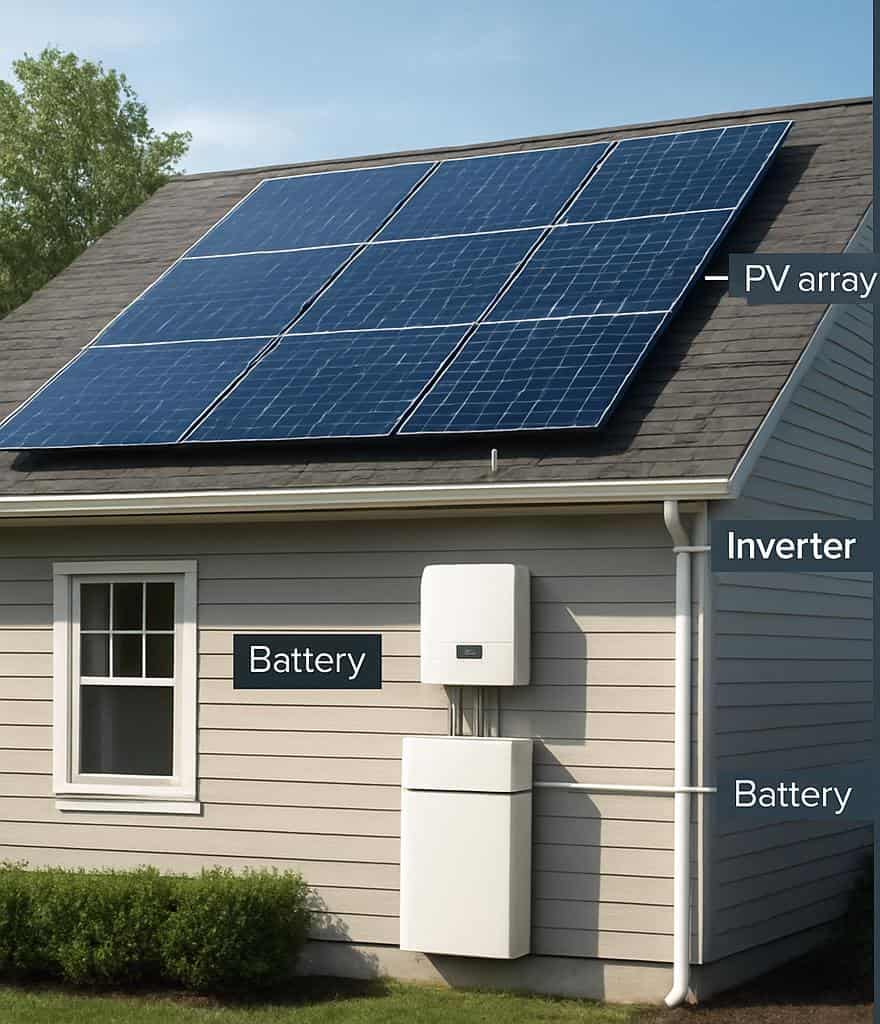
A complete solar backup power system usually includes:
Solar Panels:Solar panels convert sunlight into DC electricity
Hybrid Solar Inverter:It converts DC electricity into AC electricity for household use and manages the connection between:
Solar panels
Battery storage
Grid power
Backup loads
Battery Energy Storage System:Battery storage allows users to save solar energy for later use.
For example:
Daytime: Solar power supplies loads and charges batteries
Night: Battery provides electricity
Grid failure: Battery automatically provides backup power
NREL research shows that residential PV-plus-storage systems can significantly extend backup duration during outages. One modeled residential system with larger battery capacity provided approximately 35 hours of backup without PV recharging, compared with about 10 hours for a smaller battery system.
Why Hybrid Inverter + Battery Storage Is a Cost-Effective Choice
Compared with fuel generators, photovoltaic backup systems provide long-term economic advantages:
- No fuel cost
- Solar energy is free and renewable.
- Lower maintenance requirements
- Battery storage systems require less routine maintenance compared with fuel-based generators.
- Long service life
- Modern lithium battery systems are designed for thousands of charge cycles, making them suitable for long-term residential and commercial applications.
- Intelligent energy management
Users can optimize energy consumption through:
- Solar priority mode
- Battery charging management
- Time-of-use electricity strategies
- Remote monitoring
Reliable Photovoltaic Solutions for Energy Security
For households and businesses facing unstable grid conditions, photovoltaic technology provides a practical pathway toward energy independence.
A complete solution based on: Solar Panels+ Hybrid Inverter+ Battery Energy Storage System
can provide:
- Reliable backup electricity
- Lower energy costs
- Improved energy independence
- Stable power supply during grid failures
MINVIC photovoltaic solutions integrate high-performance solar inverter technology and battery storage systems to support residential and commercial energy needs.
Whether for emergency backup power or daily energy optimization, modern photovoltaic technology helps users build a more reliable and sustainable electricity system.

