
Inverter Performance in Extreme Environmental Conditions
Introduction
As one of the most critical components in a solar power system, the inverter plays a central role in converting the direct current (DC) generated by solar panels into usable alternating current (AC). The reliability and efficiency of the entire photovoltaic (PV) system largely depend on the inverter’s ability to operate under different environmental conditions.
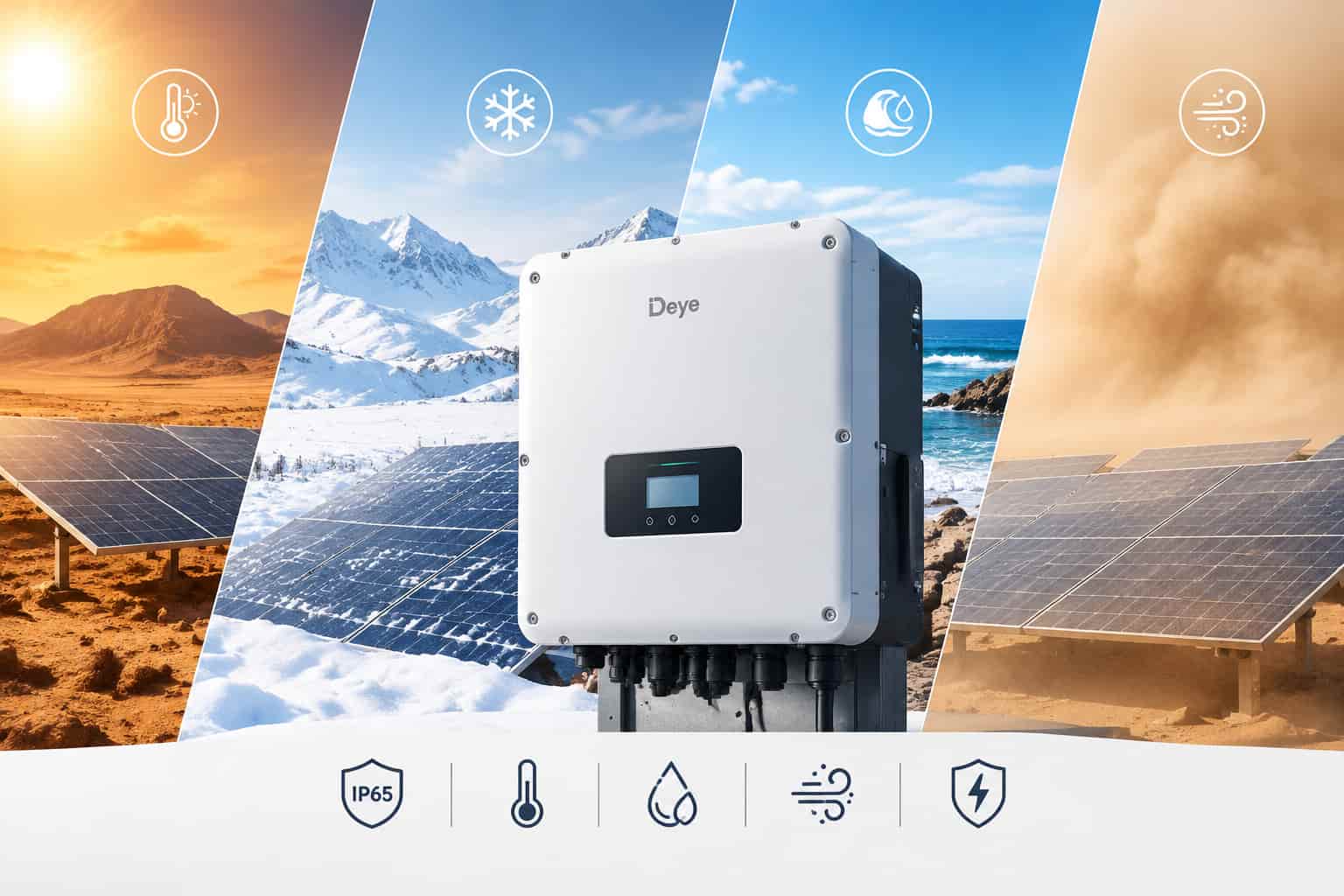
However, solar installations are not always located in ideal environments. Extreme temperatures, high humidity, heavy dust, salt exposure, strong ultraviolet radiation, and frequent temperature fluctuations can significantly affect inverter performance and service life.
For installers and system designers, understanding how inverters respond to harsh environments is essential. This article explains what defines extreme operating conditions, how these factors influence inverter performance, the technical challenges involved, and the protection features that help ensure safe and reliable operation. It also provides practical recommendations and inverter configuration experience for demanding installation environments.
What Are Extreme Conditions for Solar Inverters?
Extreme conditions refer to environmental factors that exceed or challenge the normal operating range specified by the inverter manufacturer.
Common extreme environments include:
- Extremely high or low ambient temperatures
- High humidity and moisture exposure
- Coastal areas with salt air
- Dusty, sandy, or desert environments
- Industrial areas with heavy pollution
- Strong UV radiation
- Frequent temperature changes between day and night
These conditions can accelerate component aging, increase the risk of electrical failures, and reduce overall system reliability.
High humidity and accumulated dust are especially concerning because they may cause corrosion, insulation degradation, and even short circuits inside the inverter.
How Temperature, Dust, and Humidity Affect Inverter Performance
Impact of High Temperatures
High operating temperatures can negatively affect inverter efficiency and reliability. As internal temperatures increase, electrical resistance within components may rise, leading to higher energy losses and additional heat generation.
When temperatures exceed the inverter’s designed operating range, the device may automatically reduce output power through a process known as thermal derating. This protective function prevents overheating but can temporarily reduce system performance.
In addition, repeated temperature cycles between hot days and cool nights create mechanical stress on internal components, especially solder joints and electronic connections. Over time, this thermal stress may contribute to premature component failure.
Impact of Dust and Sand
Dust accumulation is a common challenge in desert, agricultural, and industrial environments.
When dust builds up on cooling components such as heat sinks, it creates an insulating layer that reduces heat dissipation efficiency. Poor cooling performance can cause internal temperatures to rise, triggering protection mechanisms and unexpected shutdowns.
Regular cleaning and inspection are therefore essential in dusty environments to maintain proper airflow and thermal performance.
Impact of Humidity and Salt Exposure
High humidity and coastal salt air can accelerate corrosion of electrical contacts, circuit boards, and internal metal components.
Moisture condensation inside the inverter may also reduce insulation performance, increasing the risk of electrical faults and safety issues.
For installations in coastal or humid regions, selecting an inverter with appropriate protection ratings and corrosion-resistant design features is particularly important.
Inverter Maintenance and Diagnostics in Extreme Environments
Inverters installed in deserts, coastal regions, or highly polluted industrial areas require more frequent inspection and maintenance compared with standard installations.
Dust, soot, salt particles, and moisture deposits can reduce cooling efficiency by blocking ventilation channels and heat dissipation surfaces. Corrosion may damage electrical connections and printed circuit boards, resulting in insulation failures or operational problems.
During routine maintenance, installers should check:
- Internal inverter temperature
- Cooling system performance
- Fan operation and unusual noise
- Heat sink cleanliness
- Airflow efficiency
- Insulation resistance
- Thermal protection functions
Overheating is one of the most common causes of inverter shutdowns and system performance degradation. Modern inverter systems often include remote monitoring and fault diagnosis functions, allowing potential problems to be identified and addressed before major failures occur.
Recommended Inverter Types and Configurations for Extreme Locations
For challenging environments, selecting an inverter with strong environmental protection, a wide operating temperature range, and reliable thermal management is essential.
For example, Deye inverters such as the SUN-SG04LP3 series have demonstrated reliable performance in various extreme climate conditions. These inverters are designed to operate within a wide temperature range from -25°C to +60°C and feature IP65 protection, providing resistance against dust and water exposure.
They are widely applied in regions with harsh environmental conditions, including dry inland areas of Australia and South Africa, where strong winds, sand, and significant temperature variations place additional stress on electronic equipment.
The temperature-controlled fan system improves energy efficiency by activating active cooling only when necessary, helping maintain stable operation while reducing unnecessary power consumption.
Frequently Asked Questions About Inverters in Extreme Conditions
1. What environmental factors are considered extreme for inverters?
Extreme inverter environments typically include:
- Continuous high temperatures above 40°C
- Severe winter conditions with prolonged freezing temperatures
- High humidity environments
- Coastal locations with salt exposure
- Dusty desert, industrial, or sandy areas
These conditions can influence inverter performance, reliability, and expected service life.
2. What protection level should an inverter have for extreme environments?
For harsh installation conditions, an inverter with at least IP65 or IP66 protection is recommended.
Additional protection features to consider include:
- Surge protection devices (SPD)
- Internal pressure-resistant designs
- Arc fault protection (AFCI)
- Advanced monitoring and diagnostic functions
These features help protect the inverter from environmental damage and improve long-term system safety.
3. Which inverter features are important for extreme climates?
The ideal inverter for extreme environments should have:
- High IP protection ratings
- Wide operating temperature capability
- Reliable surge protection
- Effective thermal management
- Remote monitoring and fault detection capabilities
The final selection should always consider the specific installation location and environmental challenges.
4. When are optimizers recommended in extreme environments?
Optimizers are especially useful when solar installations experience:
- Partial shading
- Complex roof layouts
- Different panel orientations
- Uneven sunlight exposure
They allow module-level monitoring and optimization, improving system visibility and energy performance, particularly when the inverter does not provide advanced shading management functions.
5. Can extreme environments reduce inverter performance?
Yes. High temperatures and other harsh conditions can reduce inverter output.
For example, when internal temperatures become too high, the inverter may enter derating mode to protect itself from overheating. Proper ventilation, effective heat dissipation, shading solutions, and selecting an inverter designed for high-temperature operation can help maintain stable performance.
Conclusion
Extreme environmental conditions present significant challenges for solar inverter operation. Temperature stress, dust accumulation, humidity, and salt exposure can all influence efficiency, reliability, and service life.
Choosing an inverter with appropriate protection ratings, strong thermal management, and advanced monitoring capabilities is essential for maintaining long-term PV system performance.
For installers working in demanding environments, careful equipment selection combined with regular maintenance and diagnostics can significantly improve system reliability and reduce unexpected downtime.

