


3kW vs 5kW Solar Hybrid Inverter: Which One Is Right for Your Home?
When choosing a home solar inverter, many homeowners search online for information to determine whether a 3kW solar hybrid inverter or a 5kW solar hybrid inverter is the better choice for their needs. However, without a clear selection standard, it can be difficult to decide which option is truly suitable.
This guide will help you understand the key differences between 3kW and 5kW solar hybrid inverters, break down the factors you should consider, and provide a practical reference to help you make the right decision for your home energy system.
What Is a Solar Hybrid Inverter?
Before deciding between a 3kW and 5kW solar hybrid inverter, it is important to understand how a solar hybrid inverter works and its role in a home energy system.
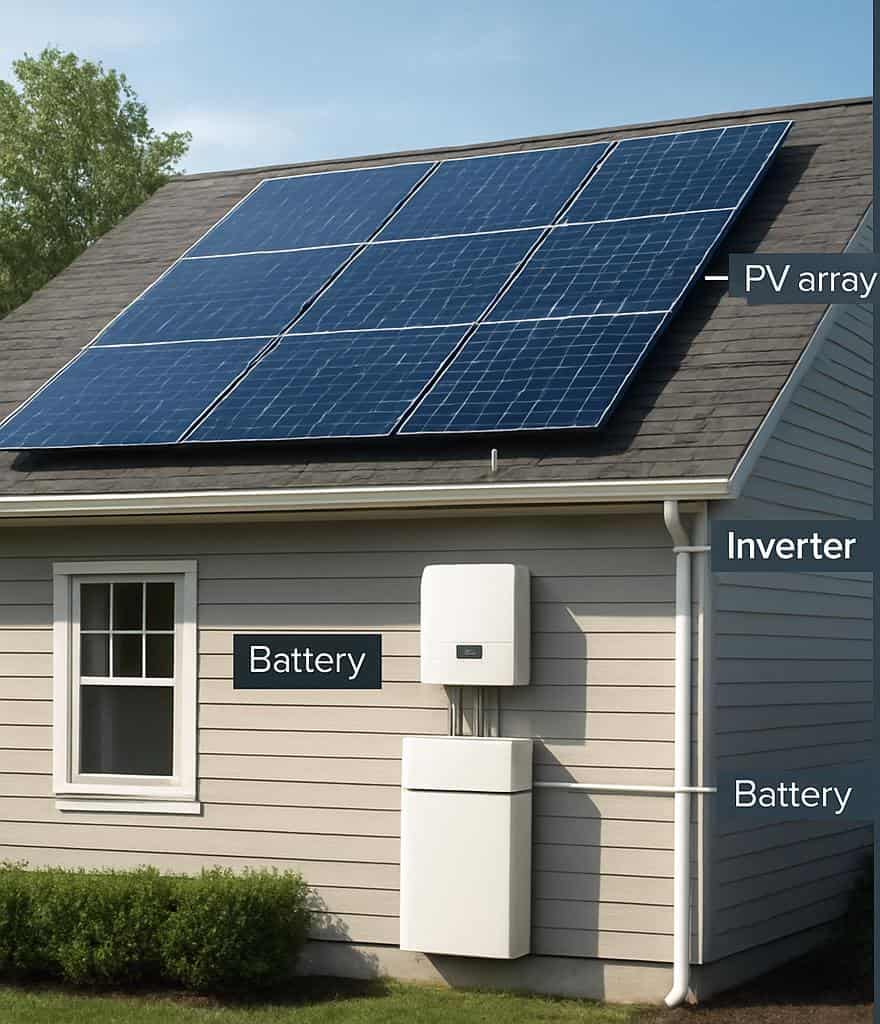
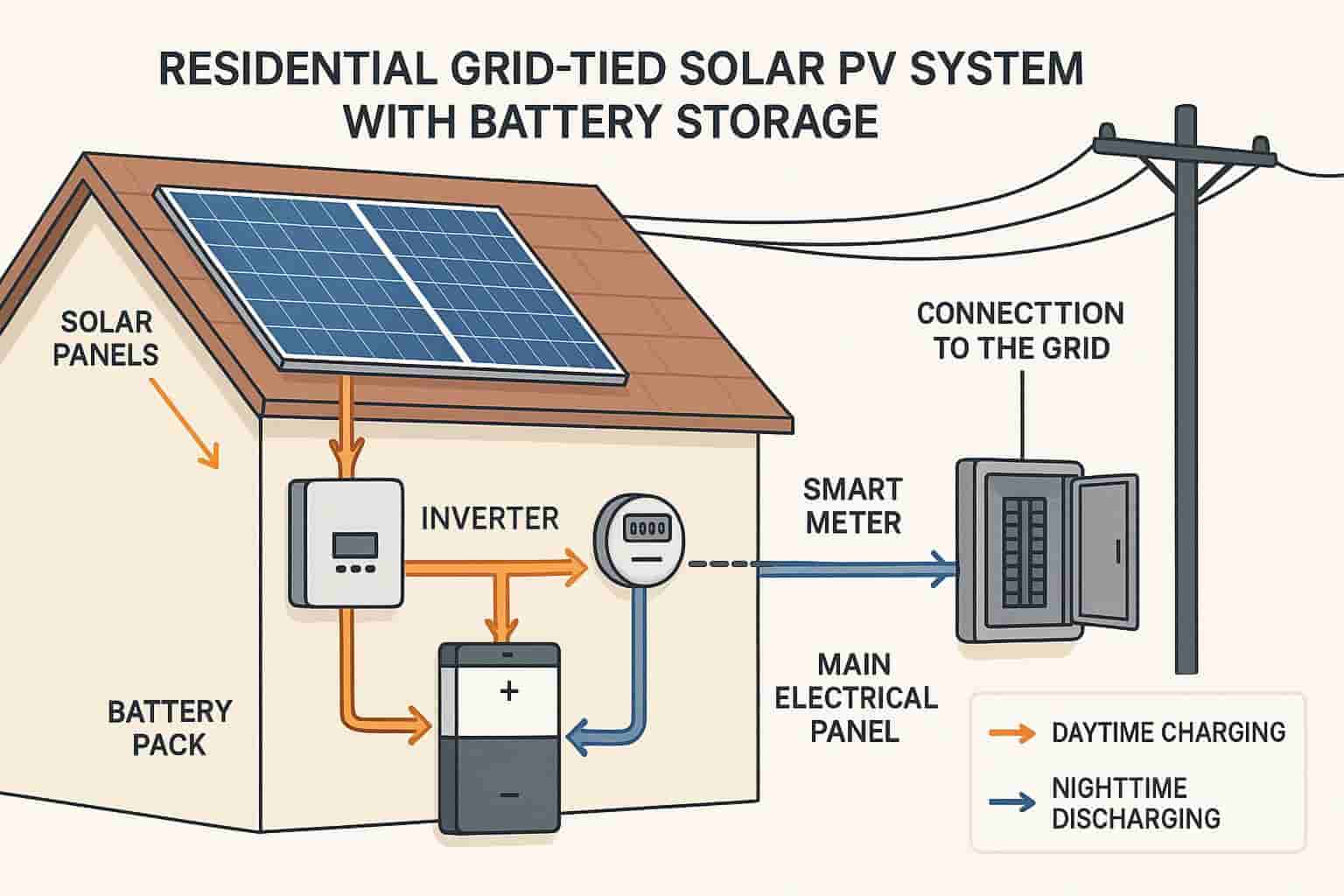
A solar hybrid inverter is an advanced power electronics device that combines photovoltaic (PV) power conversion, battery energy storage management, and intelligent energy control. Simply put, it acts as the “brain” of a residential solar energy system. It converts the DC electricity generated by solar panels into usable AC electricity for household appliances, while also managing battery charging and discharging, as well as grid power supply.
During the daytime, a solar hybrid inverter prioritizes the use of solar energy to power household loads. Any excess solar power can be stored in the battery for later use. At night or during periods of insufficient solar generation, the inverter automatically switches to battery power or grid electricity to ensure a stable and reliable energy supply for the home.
Unlike traditional solar inverters, hybrid inverters can not only convert solar DC power into AC electricity but also enable two-way communication between solar panels, battery storage systems, and the utility grid. This flexibility makes solar hybrid inverters an increasingly popular choice for homeowners looking to improve energy efficiency, increase energy independence, and optimize electricity usage.
After understanding the basic working principle of a solar hybrid inverter, many homeowners still have common questions: “Should I choose a 3kW or 5kW hybrid inverter? Which one offers better performance? Which capacity is more suitable for my home? What is the most practical hybrid inverter brand?”
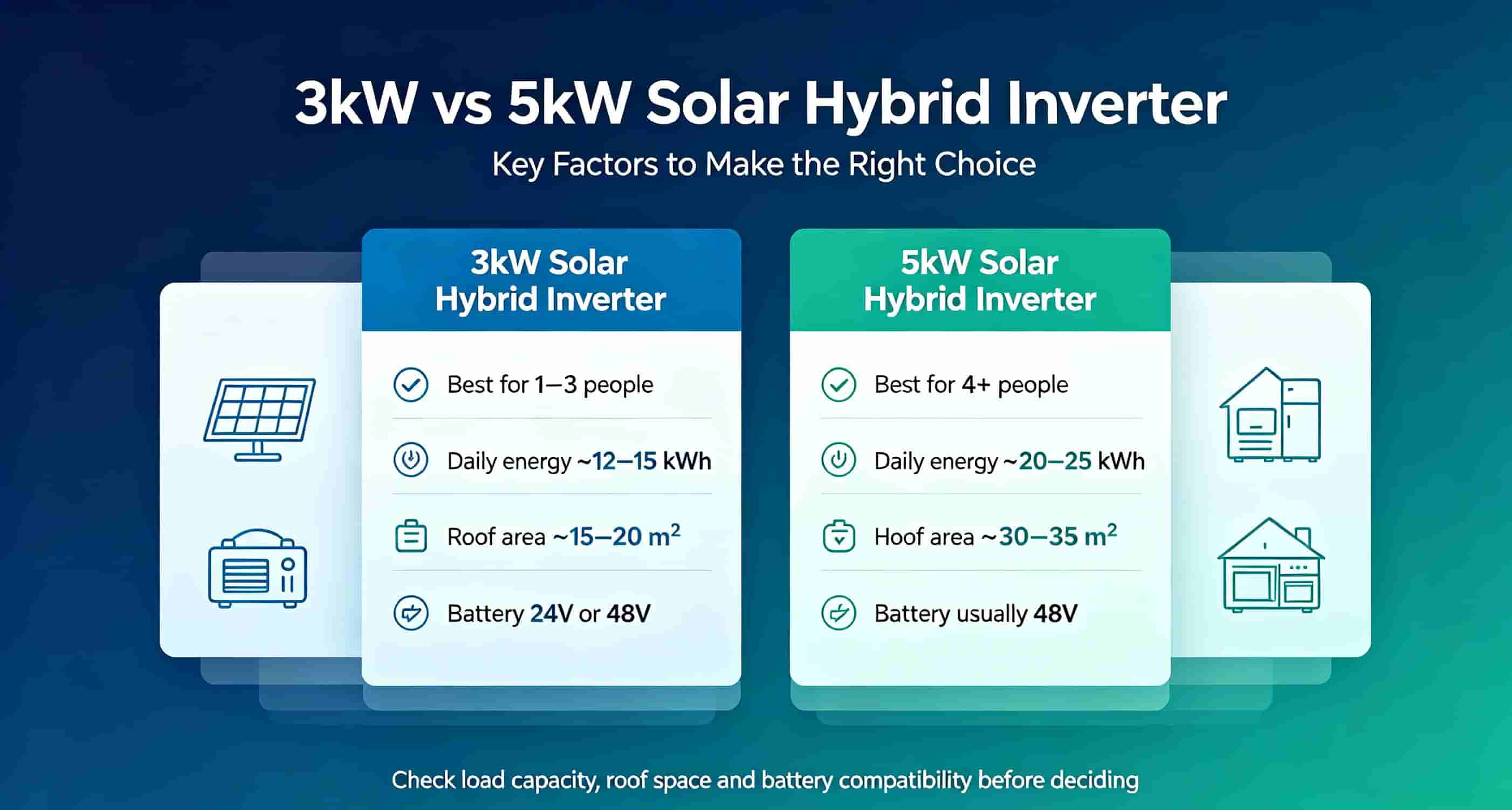
To help answer these questions, let’s first compare the key differences between 3kW and 5kW solar hybrid inverters in the table below.
3kW vs 5kW Hybrid Solar Power Inverter
| Feature | 3kW Solar Hybrid Inverter | 5kW Solar Hybrid Inverter |
|---|---|---|
| Suitable Household | Small family, 1‑3 people | Medium to large family, 4+ people |
| Typical Appliances | Lighting, fan, TV, fridge, 1 AC | Multiple ACs, electric oven, washer‑dryer |
| Daily Energy Output | ~12‑15 kWh | ~20‑25 kWh |
| Roof Area | ~15‑20 m² (8‑12 solar panels) | ~30‑35 m² (12‑16 solar panels) |
| Battery Compatibility | 24V or 48V | Usually 48V, supports large‑capacity storage |
How to Choose the Right Hybrid Solar Inverter
Step 1: Analyze Your Electricity Consumption
The first step in selecting the right hybrid solar inverter is understanding your household’s actual electricity usage. This helps ensure that the inverter capacity can meet daily power demands and prevents situations where the system has to rely heavily on grid electricity due to insufficient inverter output.
To determine the appropriate inverter size, it is important to review your daily or monthly electricity consumption. Professional solar engineers typically use tools such as SolarPVSizer or other industry design software, combined with electricity bills from the past 12 months, to analyze energy usage patterns. By calculating the total monthly consumption and dividing it by the number of days, they can estimate the average daily electricity demand.
For example, based on my household’s actual electricity usage, the average monthly consumption last year was around 450 kWh, which equals approximately 15 kWh per day. After completing this calculation, the solar engineer can better understand the household’s energy requirements and provide a suitable hybrid inverter recommendation.
Step 2: Consider Future Electricity Demand
When selecting a hybrid solar inverter, it is important not only to consider your current electricity consumption but also to plan for future energy needs. Solar engineers often recommend leaving some additional capacity to accommodate potential increases in household power demand.
If the inverter size is selected only based on current electricity usage, future upgrades such as installing central air conditioning, electric ovens, EV chargers, or other high-power appliances may increase the household load beyond the inverter’s capacity. This could result in insufficient power supply and greater reliance on grid electricity.
For example, my household is located in an area with unstable grid voltage and consists of four family members. Our existing appliances include a 2kW electric oven, a 1kW water heater, and other daily-use devices. In the future, we plan to add a 3–7kW home EV charger and a 2–3kW clothes dryer.
After evaluating both current and future electricity requirements, the solar engineers recommended choosing a 5kW solar hybrid inverter. They suggested the Deye Hybrid Inverter SUN-3/3.6/4/4.6/5/6K-SG06LP1-EU-BM1/BM2 Single Phase, which can meet our current energy needs while providing sufficient capacity for future high-power appliances.
Step 3: Consider Battery Storage and Grid Independence
When choosing a solar hybrid inverter, purchasing the inverter alone is usually not enough to achieve maximum energy efficiency. A solar inverter can convert the DC electricity generated by solar panels into usable AC power, but a hybrid inverter also provides an important function known as intelligent energy management. By integrating a battery storage system, homeowners can better utilize solar energy and improve overall energy independence.
For example, the Deye 3–6kW hybrid inverter features an advanced intelligent energy management system that can monitor household loads in real time, optimize power distribution, maintain stable electricity supply during peak demand periods, and provide backup power during grid outages. However, without a battery storage system, many of these energy management benefits cannot be fully utilized. Therefore, battery compatibility and storage capacity are important factors when selecting a hybrid solar inverter.
According to the U.S. Department of Energy’s National Renewable Energy Laboratory(NREL), a typical residential solar PV system without battery storage may have a solar self-consumption rate of approximately 20%–40%, depending on household electricity demand, system size, and the timing of energy use. When battery storage is added, the self-consumption rate can increase significantly because excess daytime solar power can be stored and used during the evening or other periods of low solar generation. NREL modeling indicates that residential PV-plus-storage systems can achieve self-consumption rates of approximately 60%–90% under suitable system configurations and operating conditions. Actual results vary according to battery capacity, PV system size, household load profile, weather conditions, and energy management settings.
A smart meter-based study conducted in Arizona, USA, also showed that residential energy storage systems can reduce reliance on grid electricity by storing excess solar power and using it during peak electricity price periods. As a result, homeowners can improve energy utilization efficiency and potentially lower overall electricity costs.
Step 4: Evaluate Budget and Return on Investment
The final step in choosing between a 3kW hybrid solar inverter and a 5kW hybrid inverter is evaluating your budget and expected return on investment (ROI). A solar energy system should not be viewed only as an equipment purchase, but also as a long-term investment in energy savings and electricity independence. By comparing the initial cost with potential energy benefits, homeowners can select the most suitable inverter capacity for their needs.
Every household has different electricity requirements and financial considerations. If the goal is only to cover basic household power consumption, a 3kW hybrid inverter may be a suitable option because it generally has a lower upfront cost compared with a 5kW inverter.
However, a higher-capacity 5kW hybrid inverter can provide greater energy flexibility, support more household appliances, and potentially achieve higher electricity savings over time. In practical applications, the return on investment (ROI) of a 5kW hybrid inverter can be approximately 1%–6% higher than a 3kW inverter, although the actual results depend on factors such as electricity consumption, solar system size, battery capacity, electricity prices, and local conditions.
From a long-term perspective, homeowners who expect increasing electricity demand or want to maximize solar energy utilization may find a 5kW hybrid inverter to be a more suitable investment.
Conclusion
After understanding the key differences between a 3kW and 5kW hybrid solar inverter, you should now have a clearer idea of which option is more suitable for your home energy needs.
Whether you have a small household or a medium-sized home, it is important to consider not only your current electricity consumption but also future energy demand. With the growing adoption of renewable energy, many countries and regions now offer solar installation incentives, battery storage subsidies, and other financial support programs. These incentives can help reduce the initial investment cost of a solar system and shorten the payback period.
If you still have questions about selecting the right hybrid inverter capacity, our SRNE solar engineers can provide professional guidance and help you evaluate your electricity usage, system requirements, and future energy plans.
Read more:

