
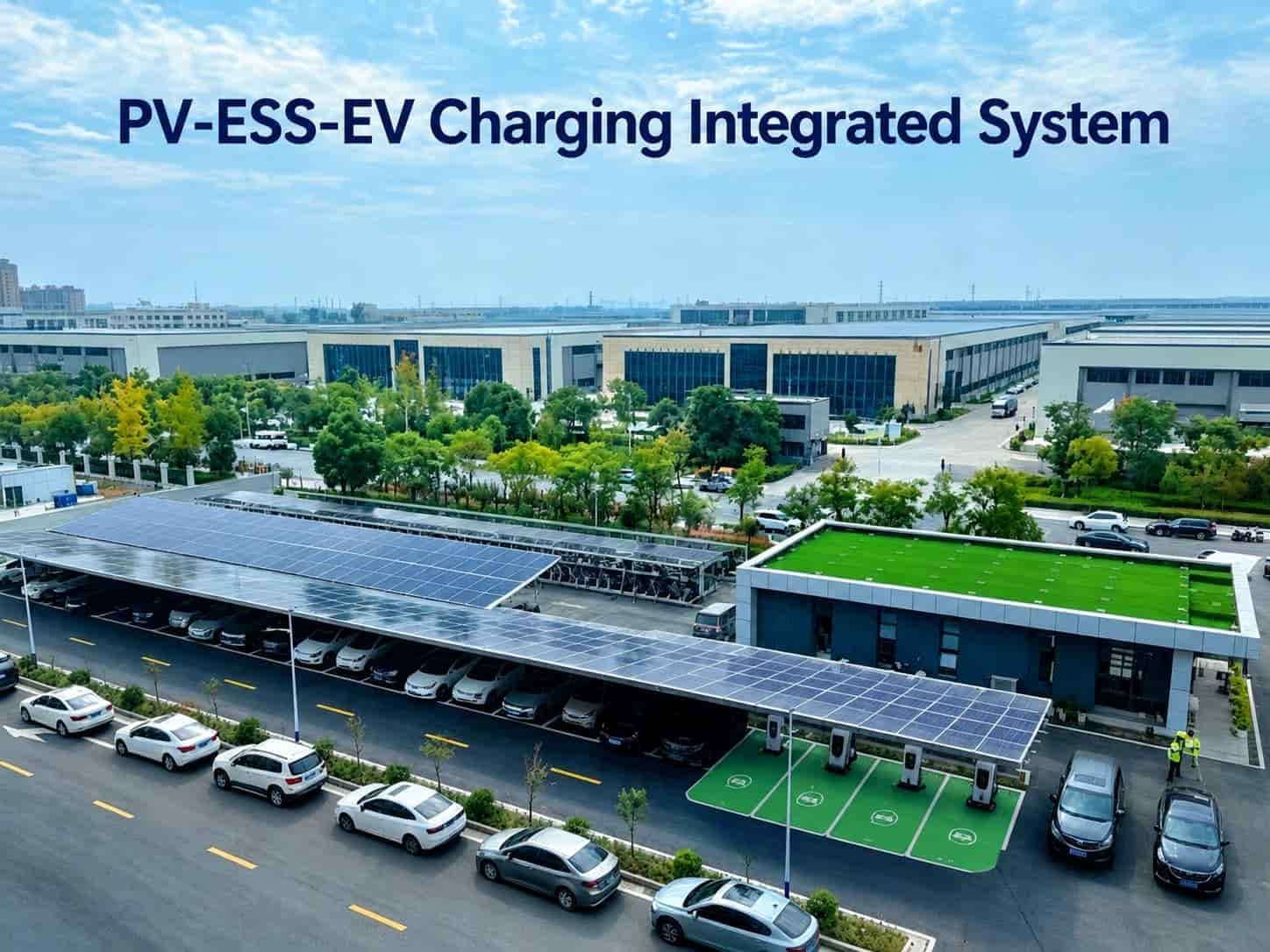
Solar Energy Storage & EV Charging Integrated System
Basic Definition
The PV–ESS–EV Charging Integrated System refers to a comprehensive distributed energy solution that combines photovoltaic (PV) power generation, energy storage systems (ESS), and electric vehicle (EV) charging infrastructure.
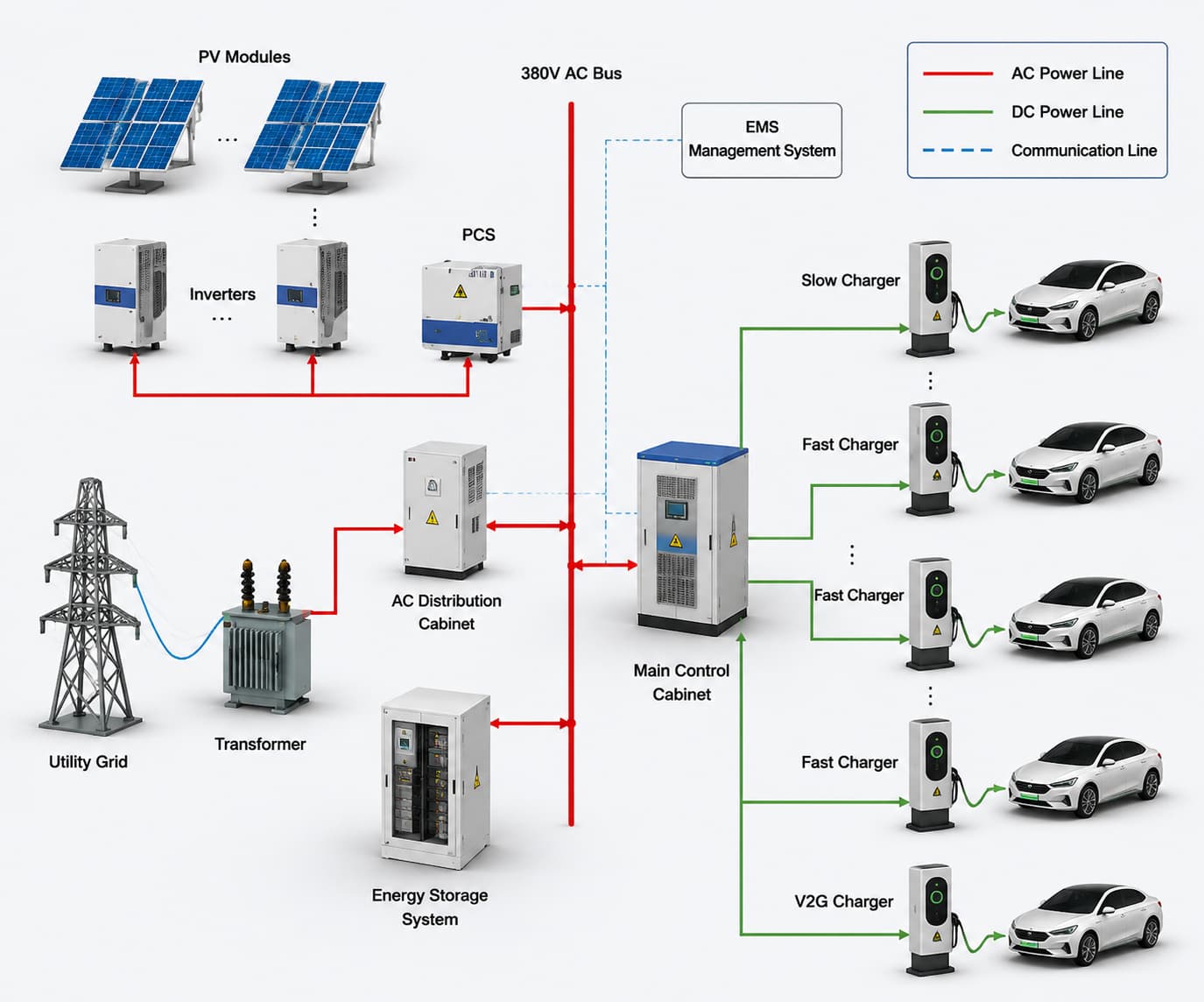
It is coordinated by an EMS (Energy Management System), which intelligently integrates all three components to form a closed-loop microgrid:
solar power generation → energy storage → electricity consumption (EV charging and building loads).
This integrated energy architecture enables on-site renewable energy consumption, reduces electricity costs, and ensures stable and reliable EV charging power supply. It is a mainstream deployment model for modern distributed renewable energy systems.
Core System Components
Photovoltaic (PV) System – Energy Generation Source
Key components: PV modules, inverters, combiner boxes, solar carport structures.
Function: Generates clean solar energy during the daytime and prioritizes power supply to EV chargers, industrial facilities, and residential or commercial loads.
Energy Storage System (ESS) – Energy Buffer & Stabilization Unit
Key components: Low Voltage Lithium Battery,High VoltageLithium Battery,All-in-one Inverter and Battery.
Function:Storing excess solar energy,Releasing energy during peak electricity demand,Mitigating power fluctuations
,Reducing the need for grid expansion.
EV Charging System – End-Use Energy Terminal
Key components: DC fast chargers, ultra-fast chargers, and AC chargers, supporting electric vehicles, industrial EVs.
MS (Energy Management System) – Intelligent Control Hub
The EMS acts as the “brain” of the integrated energy system. It continuously monitors PV generation, battery SOC, EV charging demand, and grid electricity prices, and intelligently optimizes energy flow in real time.
It supports multiple operating modes and enables remote cloud-based monitoring, control, and predictive maintenance, ensuring efficient and stable system operation.
Benefits
Cost Reduction & Energy Savings
The system enables peak shaving and valley filling to significantly reduce peak electricity costs. It eliminates the need for expensive grid capacity expansion and maximizes self-consumption of on-site renewable energy, lowering overall electricity procurement costs.
High Renewable Energy Utilization
By integrating PV generation with energy storage and intelligent EMS control, the system effectively resolves the mismatch between daytime solar production and nighttime demand, increasing renewable energy self-consumption rates to over 80%.
Stable and Reliable Power Supply
The Energy Storage System (ESS) smooths high-power EV charging loads and provides backup power during grid outages, ensuring uninterrupted and stable energy supply for critical applications.
Low-Carbon & Carbon Neutral Compliance
The system fully utilizes solar energy, helping industrial parks, EV charging stations, and commercial facilities achieve carbon neutrality targets and meet green certification and ESG requirements.
Additional Revenue Streams
Energy storage assets can participate in grid ancillary services such as frequency regulation, demand response, virtual power plants (VPP), and surplus power export, creating multiple revenue opportunities beyond energy savings.
Application
Residential Villas & Communities
Rooftop solar PV systems combined with home energy storage (ESS) and residential EV chargers enable high energy self-sufficiency. This solution supports uninterrupted power supply during grid outages and reduces household electricity costs.
Commercial & Industrial Parks / Factories
Large-scale rooftop PV systems integrated with industrial ESS and EV charging stations for employee vehicles provide a stable and efficient energy solution, supporting both production loads and transportation electrification within industrial sites.
Public EV Charging Stations & Highway Service Areas
Solar carports combined with high-capacity energy storage systems and high-power fast charging infrastructure help overcome grid capacity limitations, ensuring stable and reliable EV charging operations even during peak demand periods.
Remote Off-Grid Areas (Mountains, Campsites, Islands)
Off-grid PV–ESS–EV charging systems operate independently from the utility grid, providing a fully autonomous renewable energy supply for remote locations with no grid access.
Utility-Scale Solar Power Plants with Charging Hubs
Ground-mounted utility-scale PV plants integrated with centralized energy storage systems and EV charging service areas form large-scale integrated energy hubs, enabling multi-energy applications and enhanced asset value.
Physical Diagram of Work
Interested in our solar energy solutions or energy storage systems?
Contact us today to discuss your project requirements. Our professional team will provide timely support, answer your questions, and help you find the most suitable energy solution for your needs.

