
Residential PV Systems
1. System Architecture
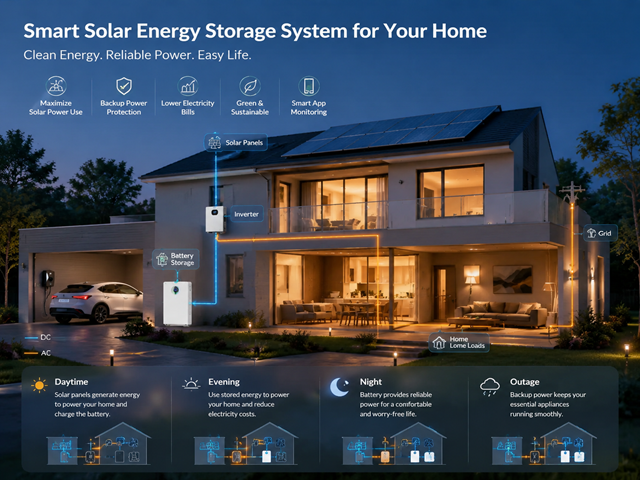
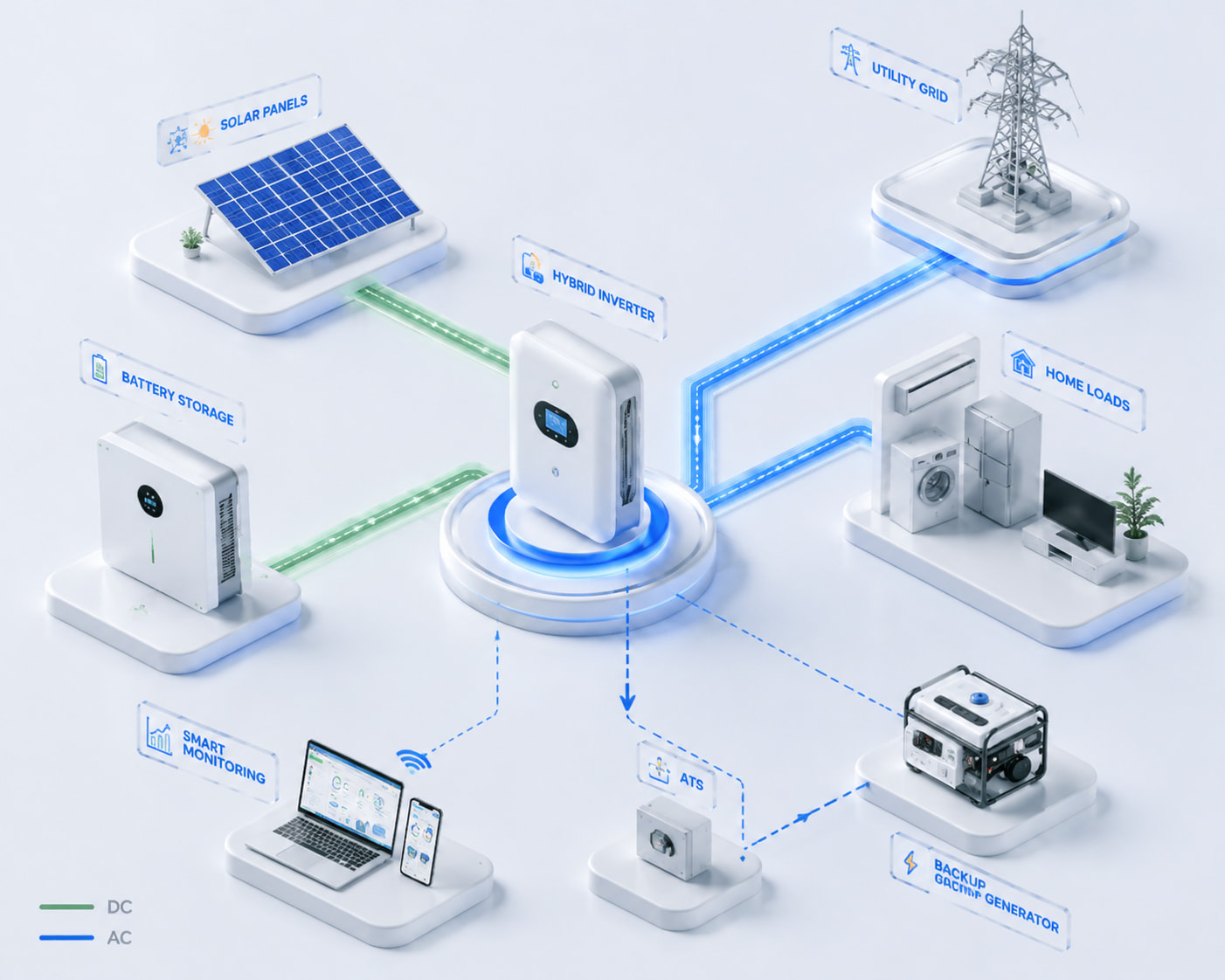
Solar panels produce DC power and feed it to the central inverter.
The unit converts DC to AC to power household loads; extra electricity charges backup batteries.
An ATS auto switch switches to utility grid when power is insufficient.
Users remotely monitor all energy data via cloud on phones or laptops.
Micro Inverter Solar System
Each PV panel is paired with an independent micro inverter to convert DC to AC on the rooftop.
All AC power merges to supply home appliances, with the grid as standby power.
Real-time generation data syncs to cloud for remote intelligent monitoring.
2.Benefits
Compact Structure:
Space-saving design enables quick one-person installation to cut residential PV labor costs.
High Energy Efficiency:
Multi-MPPT trackers fit multi-orientation rooftops and maximize solar power generation.
Safe & Stable Operation:
Optimized grid-adaptive algorithm guarantees reliable performance amid complex grid conditions.
Long-term Cost Savings:
Free on-site solar power offsets grid consumption and protects users from soaring electricity tariffs.
3.Application
Household Size
Small Homes (1–2 People | 50–120㎡)
For apartments and compact homes with basic electricity needs, a small home battery PV system ensures stable power for lighting, refrigeration, and essential appliances while maximizing residential solar energy usage.
Recommended capacity: 5–8 kWh residential ESS
Key solution: compact home energy storage system for apartments
Medium Homes (3–4 People | 100–250㎡)
The most common use case for a residential solar battery storage system, suitable for families with moderate to high electricity consumption including air conditioning, kitchen appliances, and daily household devices.
This configuration significantly improves solar self-consumption efficiency and supports smart home energy management through hybrid solar integration.
Recommended capacity: 8–15 kWh home energy storage system
Key solution: hybrid solar PV energy storage system for home
Large Homes (5+ People | 250–500㎡+)
Designed for villas and high-energy-demand households, a whole home backup power system ensures uninterrupted electricity for multi-air-conditioning systems, EV charging, heating, and high-power appliances.
This type of high-capacity residential ESS is often combined with off-grid or hybrid solar systems for maximum energy independence.
Recommended capacity: 15–30+ kWh high capacity home PV Energy Storage system
Key solution: whole house PV Energy Storage system
Application Scenarios
Home Backup Power System
A home backup power system ensures continuous electricity supply during grid outages by automatically switching to stored battery energy, protecting essential home loads such as lighting, refrigeration, and communication systems.
Time-of-Use Electricity Cost Optimization
In regions with peak and off-peak electricity pricing, a smart energy storage system for home charges during low-cost periods and discharges during peak hours, enabling effective energy cost optimization and peak shaving.
Off-Grid Energy Independence
For remote areas or unstable grid environments, an off-grid solar energy system with battery storage provides reliable and independent power supply without dependence on the utility grid.
4.Physical Diagram of Work
Interested in our solar energy solutions or energy storage systems?
Contact us today to discuss your project requirements.Our professional team will provide timely support, answer your questions, and help you find the most suitable energy solution for your needs.

