


Spring Solar Maintenance Checklist: 7 Essential Tips to Maximize Solar Energy Output
Spring is a crucial period for solar PV system maintenance and performance optimization.
After months of winter exposure—snow, dust accumulation, temperature fluctuations, and moisture—solar systems often experience hidden efficiency losses that directly impact summer generation performance.
For EPC contractors, solar farm operators, and commercial PV system owners, spring maintenance is not optional—it is a key factor in maximizing:
- Solar energy yield
- System reliability
- Long-term ROI
- Operational stability
A structured spring solar maintenance checklist ensures your photovoltaic system is fully optimized before peak production season begins.
Why Spring Solar Maintenance Is Critical for PV Systems
Spring represents the transition from low solar irradiation to peak summer production.
Without proper maintenance, PV systems may experience:
- Reduced module efficiency due to soiling
- Inverter performance degradation
- Hidden electrical faults
- Cable aging or moisture damage
- Vegetation shading issues
In utility-scale solar projects, even 1–3% performance loss can result in significant annual revenue reduction.
7 Essential Spring Solar Maintenance Tips
1. Perform a Full Solar System Inspection
A comprehensive inspection should include:
- PV module surface condition (cracks, hotspots, discoloration)
- Mounting structure stability
- Cable and connector integrity
- Junction box sealing condition
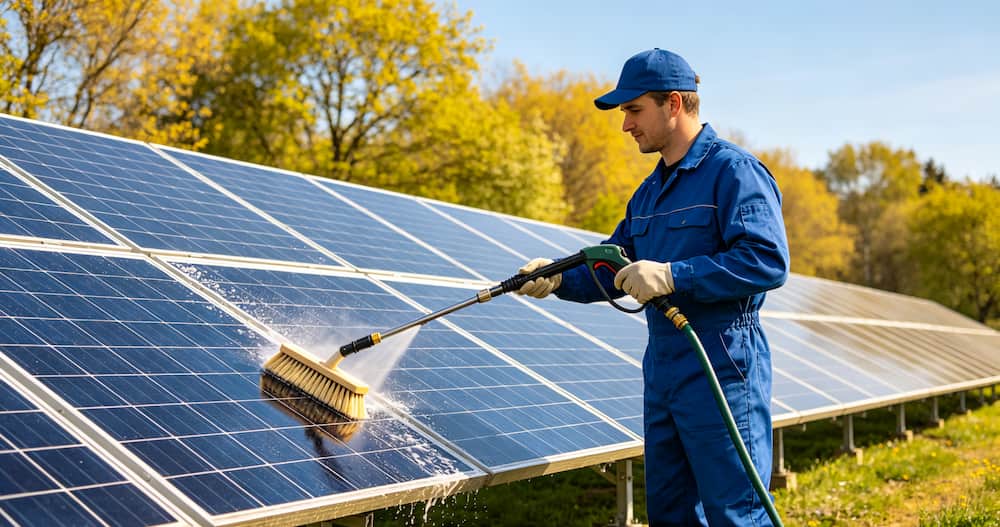
2. Clean Solar Panels for Maximum Efficiency
Winter season often leaves:
- Dust and dirt layers
- Bird droppings
- Pollen and organic debris
- Snow residue minerals
Cleaning improves light absorption and system output efficiency.
Best practices:
- Use soft cleaning tools
- Avoid abrasive materials
- Clean during early morning or late afternoon
3. Check Solar Inverter Performance
The inverter is the core of energy conversion in a PV system.
Key inspection points:
- Error logs and fault history
- Cooling system performance
- DC/AC input stability
- Efficiency ratio comparison
4. Inspect Electrical Connections and Wiring System
Winter temperature fluctuations may cause:
- Loose connectors
- Cable insulation fatigue
- Grounding instability
- Moisture penetration risks
Ensure:
- All connectors are tightened
- No visible wire damage
- Proper grounding continuity
5. Remove Vegetation and Avoid Shading Loss
Spring accelerates vegetation growth, which may result in:
- Partial module shading
- Uneven string output
- Reduced system performance
Recommended actions:
- Trim nearby trees
- Remove shading obstacles
- Optimize layout exposure
6. Analyze PV System Performance Data
Use monitoring systems to evaluate:
- Current output vs historical data
- String-level performance differences
- Inverter efficiency trends
- Peak sun hour response
If deviation exceeds 10%, further inspection is required.
7. Schedule Professional EPC Maintenance Service
Professional O&M services ensure:
- Electrical safety compliance
- System performance optimization
- Early fault detection
- Warranty protection validation
Professional after-sales technical support is the core guarantee of long-term stable operation of solar power plants, whether you cooperate with MINVIC SOLAR or other third-party maintenance service providers.
Conclusion
Carry out comprehensive and standardized spring maintenance work prior to the onset of the summer peak power generation window. This maintenance work is capable of pre-emptively removing potential hazards existing within all power generation equipment, improving the comprehensive operating efficiency of the entire photovoltaic system, and establishing a robust operational guarantee for high-power output and fault-free safe running of solar photovoltaic power stations throughout the full summer peak electricity supply cycle.

